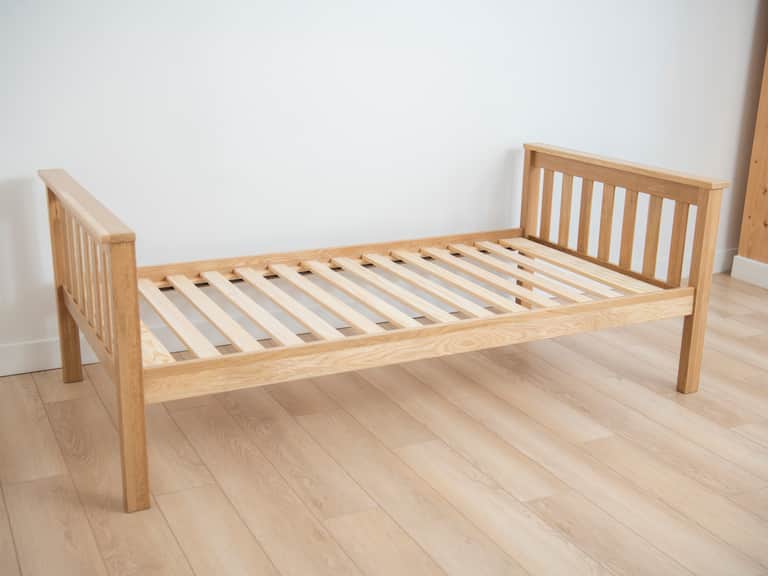
Nursery sleep environment
Choosing an Organic Crib Mattress: Fit, Materials, and Care
A thoughtful nursery begins with the essentials: a firm, flat sleep surface, a close-fitting mattress, and a clear understanding of what belongs in the crib. Organic materials may be part of your priorities, but the most important decisions are practical ones—safe fit, appropriate construction, and care that keeps the surface clean without compromising how it is used.
Published October 14, 2026
Among the many choices that shape a nursery, the crib mattress is less about decoration than dependable design. It is mostly concealed beneath a fitted sheet, yet its dimensions, firmness, materials, and care instructions matter every day. For families considering organic crib mattresses, the label can be a useful starting point—not a substitute for checking fit and following safe-sleep guidance.
Organic certification can tell you something about how particular materials were produced or processed. It does not, on its own, establish that a mattress is suitable for every crib, that it meets every applicable safety requirement, or that a particular sleep setup is safe for an infant. Treat materials and marketing claims as one part of a wider assessment. Start with the crib manufacturer’s instructions, verify the mattress is designed for that model and size, and keep the sleep surface simple.
Begin with the sleep setup, not the label
For an infant, the mattress should be firm, flat, and designed for use in a crib. The mattress should not sag or conform deeply under pressure. A fitted sheet should be the only bedding on the sleep surface unless your child’s clinician or current safety guidance indicates otherwise. Keep pillows, quilts, blankets, comforters, stuffed toys, positioners, and other soft objects out of the crib.
These basics matter regardless of whether the mattress is made with conventional materials, organic fibers, foam, or another construction. A breathable cover or a natural-fiber claim does not make a soft or poorly fitting sleep surface appropriate. Nor should a mattress be modified with an added topper to change its feel. When in doubt, use the crib and mattress as their manufacturers intended and consult current safe-sleep recommendations from a qualified health professional or public health authority.
Parents and caregivers may receive conflicting advice from advertisements, social media, and well-meaning friends. Keep the hierarchy clear: product descriptions are not a substitute for safety instructions. Look for a mattress specifically intended for the crib in question, review its labeling and documentation, and follow the crib maker’s limits for mattress size, thickness, and support.
Fit: the quiet detail that deserves a close look
A crib mattress should sit level and snugly within the crib. Gaps at the sides or corners can create a hazard, so appearance alone is not enough: confirm the mattress dimensions against the crib manual and the mattress label. Standard crib dimensions are common, but products and crib designs can vary. Never assume that an item described as “crib size” will fit every crib, including compact models, mini cribs, or older frames.
Once the mattress is in place, check all sides and corners. It should lie flat, with no conspicuous spaces between its edges and the crib frame. Do not use rolled towels, foam strips, or other improvised materials to fill a gap. If the fit seems loose, uneven, or uncertain, stop using that combination until you have confirmed compatibility with the manufacturers.
Also check the mattress’s thickness and the crib’s support system. The mattress should rest on the intended support and should not be forced into the frame, bow, or sit at an angle. As your baby grows, follow the crib manual’s guidance for lowering the mattress support. A good initial fit is not the only check the room will ever need; hardware, support settings, and the sleeping arrangement should remain appropriate as the child develops.
A practical crib mattress fit checklist
- Read the crib manual and confirm the mattress dimensions and thickness it permits.
- Check the mattress label for its intended use and size; do not rely on a general “crib size” description alone.
- Place the mattress on the correct support, following the crib manufacturer’s assembly instructions.
- Look around every edge and corner for gaps, lifting, bending, or an uneven surface.
- Use a fitted sheet made for the mattress, and make sure it stays secure.
- Recheck the setup after moving the crib, changing its support level, or replacing the mattress or sheet.
What “organic” can—and cannot—tell you
Organic crib mattresses and related bedding can involve different materials and different kinds of claims. A product may describe organic cotton, wool, or another fiber; a certification may apply to a textile, a component, or a finished item. Read the exact wording rather than treating the word “organic” as a complete description of the whole product.
Certifications are most useful when you understand their scope. Check which organization issued the certification, what product or material it covers, and whether the seller provides enough documentation to identify the certified item. A certification associated with a fabric, for example, should not automatically be taken to mean that every component in the mattress has the same certification. Likewise, terms such as “natural,” “non-toxic,” and “chemical-free” can be broad or imprecise; ask what specific materials, processes, or standards the claim refers to.
Construction is equally worth examining. Review the core, cover, seams, waterproof layers if present, and any listed fire-barrier or other components. Ask whether the manufacturer publishes care directions, warranty terms, and product testing or compliance information. These details make comparison more grounded than choosing by a single appealing phrase on a label.
Material preference is personal. Some families prioritize organic fibers; others focus on ease of cleaning, durability, or a particular construction. The useful question is not simply which material sounds most appealing, but whether the complete mattress is appropriate for the crib, clearly documented, and manageable in the home where it will be used.
Firmness, breathability, and construction
For an infant crib, firmness is a safety consideration, not just a comfort preference. The sleep surface should be firm and flat and should not form an indentation around the baby. A soft, plush surface or an added cushioning layer is not a suitable way to make a crib feel more luxurious. Adult preferences for a cloudlike mattress do not translate to an infant sleep surface.
“Breathable” is a popular word in nursery product descriptions, but it can refer to different design features and does not replace safe-sleep practices. Do not infer that a breathable cover makes it safe to add loose bedding, use a positioner, or depart from the crib manufacturer’s instructions. If a brand makes a performance claim, look for a clear explanation of what was tested and under what conditions. The most important essentials remain a suitable, firm mattress; a snug fit; and an uncluttered sleep space.
Consider practical construction details as well. A cover that can be wiped clean may suit one household, while another may prefer a product with clear, manageable care instructions. A waterproof layer can help limit moisture reaching the core, but its presence should not lead to adding extra layers that the manufacturer does not permit. Check whether the mattress is intended to be used with a particular cover or sheet and follow the directions supplied with it.
Mattress protectors and pads: a careful distinction
Protectors and pads are often grouped together, but they may differ in thickness, quilting, materials, and intended use. Before adding any layer to an infant’s crib, consult the crib and mattress instructions and current safe-sleep guidance. A separate product description—even one that calls a pad breathable, organic, or designed for a crib—does not by itself establish that it is appropriate for every infant sleep setup.
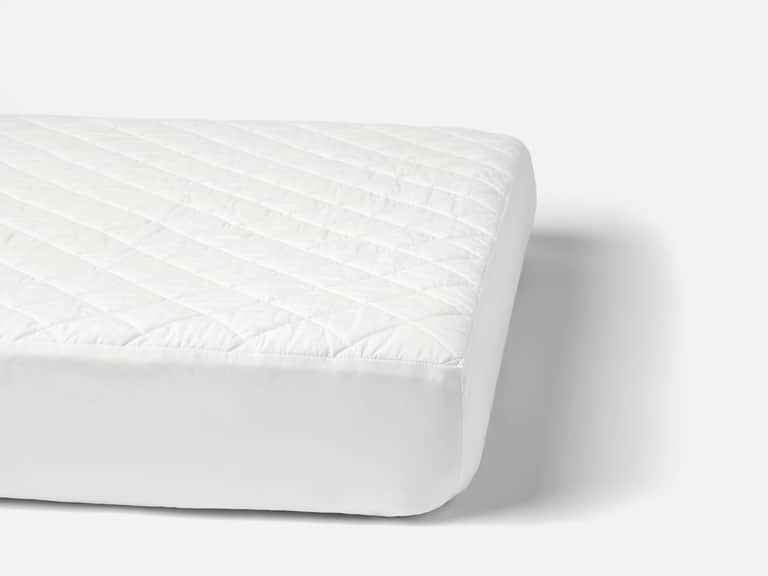
One example in the bedding category is the Organic Crib Mattress Pad, described as a quilted cotton layer with a 220-percale cover and care instructions for machine washing. It is a bedding accessory, not a crib mattress. Its listed dimensions are 28 by 52 inches, and its product description identifies it as a pad to use beneath a fitted sheet. Before considering any pad, confirm its compatibility with the mattress and crib and follow all relevant instructions. If those directions or applicable safe-sleep guidance do not clearly support its use, keep the infant sleep surface to a fitted sheet on the mattress.
More layers do not automatically mean more comfort or protection. A pad that bunches, shifts, changes the firmness of the surface, or prevents the sheet from fitting securely should not be used. If your goal is to protect the mattress from spills, compare care needs and protection features while keeping the safe-sleep setup first. Ask the manufacturer or your child’s clinician if you are uncertain about a specific accessory.
Care that keeps the sleep surface fresh
Good care begins with the product label. Follow the mattress maker’s directions for spot cleaning, drying, and any removable cover. Avoid soaking the mattress or applying cleaners that the manufacturer does not recommend. Moisture that remains inside a mattress may be difficult to detect, so allow any cleaned surface to dry completely as directed before putting it back into use.
Wash fitted sheets and any approved accessories according to their own care labels. If you use a pad or protector that is confirmed to be appropriate, check its fit after laundering: shrinkage, stretched corners, or a distorted shape can affect whether it lies flat and stays in place. A freshly laundered layer is not useful if it no longer fits securely.
Inspect the mattress periodically for damage, persistent odors, stains that cannot be cleaned as directed, loose seams, or changes in shape. Review the manufacturer’s recommendations about wear, use, and replacement. If the mattress has been involved in a significant spill or has become misshapen, contact the manufacturer for guidance rather than covering the problem with another layer.
For a secondhand mattress, careful inspection is especially important. Confirm its dimensions and compatibility with the crib, review its history if known, and check for damage, sagging, or missing product information. If its condition or safety status cannot be established, choosing a new, properly documented mattress may be the clearer course.
A considered nursery is a simple one
There is a particular elegance in a room that does not ask to be complicated. A crib with a well-fitting mattress, a secure fitted sheet, and no loose objects on the sleep surface is a more useful foundation than a crowded arrangement of accessories. Soft colors, thoughtful lighting, and a comfortable room temperature can shape the atmosphere around the crib without adding anything to the mattress itself.
For families choosing among organic crib mattresses, make a short list before comparing product pages: confirm size and crib compatibility; check firmness and construction; understand what any certification covers; read the care instructions; and consider whether the mattress can be maintained in the way your household needs. Then resist the temptation to let extra claims outrank the basics.
A mattress does not need to be fashionable to be carefully chosen. It needs to fit, remain firm and flat, and be used in line with its instructions and current safe-sleep recommendations. Organic materials may be a meaningful preference, but they are one consideration among several. The most reassuring nursery is not the one with the longest list of features. It is the one in which every essential has a clear purpose and the sleep space remains uncomplicated.
Quick comparison questions
- Will it fit? Compare the mattress’s stated dimensions with the crib manual, then inspect the installed fit around the full perimeter.
- What is it made of? Read the complete materials description, including the core, cover, and any additional layers.
- What does the certification cover? Verify the named standard and whether it applies to the material, component, or finished product.
- How should it be cleaned? Look for specific instructions and make sure the routine is realistic for your household.
- Are accessories compatible? Confirm with the crib and mattress makers before adding a pad, protector, or other layer.
- Does the setup follow safe-sleep guidance? Keep the surface firm, flat, and uncluttered, with a properly fitted sheet.
Choosing an organic crib mattress is ultimately an exercise in discernment: appreciate the materials, read past the headline claims, and give fit and safe use the final word. A few careful checks can make the nursery feel calmer—not because a label promises perfection, but because the essentials are understood and looked after.
This article is general educational information, not medical advice. For guidance about your child’s sleep or a specific product, consult a qualified health professional and follow the crib and mattress manufacturers’ instructions, along with current safe-sleep recommendations.